

Hand & Limb
Hand replantation at the wrist
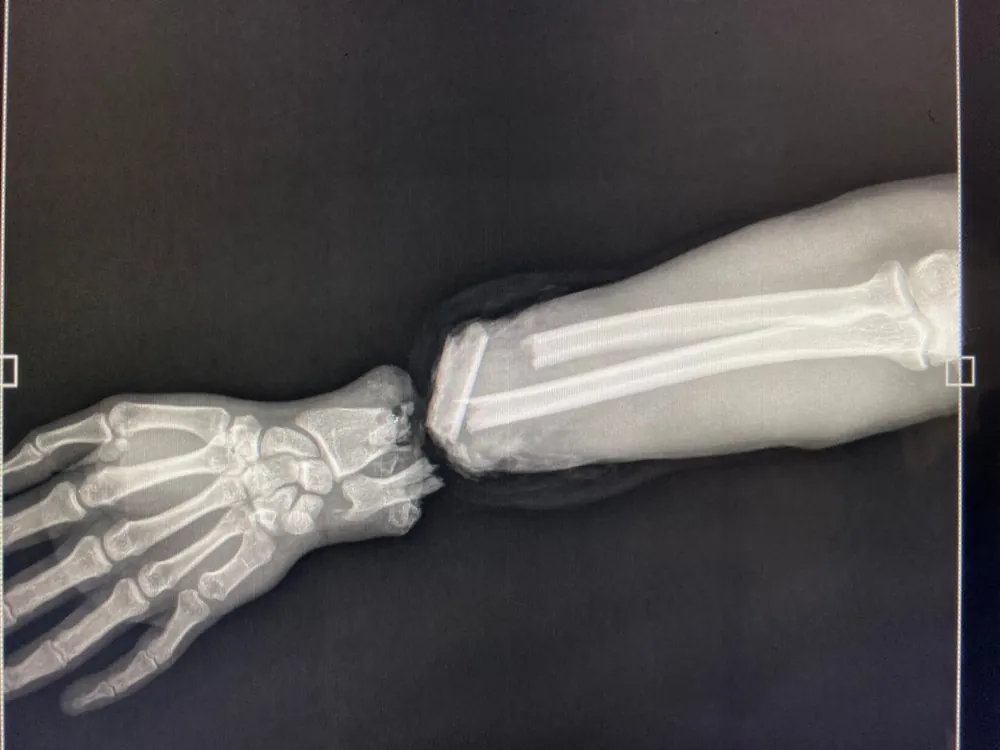
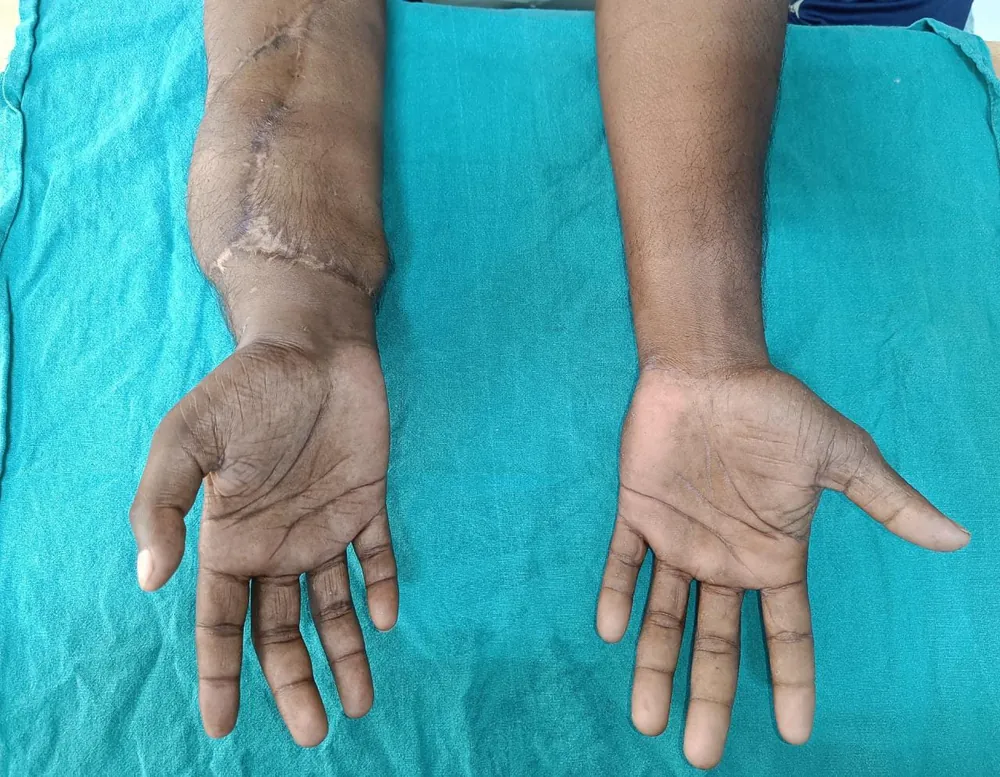
The hand survived. At nine months the wrist had healed, the fingers extended and flexed actively, and the replanted hand sat level with the uninjured one.
9 months post-op
Surgeon-led care for the hand and upper limb — from acute injuries and replantation to carpal tunnel, trigger finger and Dupuytren's — with hand therapy built in from day one.

Hand surgery is the branch of surgery devoted to the hand, wrist and upper limb — the most mechanically intricate part of the body, where bone, tendon, nerve and vessel are packed into a few centimetres and where even a small loss of movement can change how you work and live. It spans two very different worlds. The first is acute trauma: deep lacerations, fractures with skin and soft-tissue loss, cut tendons and nerves, crush injuries, and amputated fingers or hands that may be suitable for replantation. The second is elective and chronic conditions: carpal tunnel syndrome, trigger finger, De Quervain's tenosynovitis, Dupuytren's contracture, ganglion cysts and congenital hand differences in children. Dr. Aniket Dave is a microsurgery-trained plastic surgeon, which means the same hands that repair a vessel under the microscope also perform the everyday day-care procedures that quietly restore comfort and grip. The governing principle is function first — a hand that closed neatly but cannot grip has failed. That is why hand therapy is treated as part of the operation rather than an afterthought, and why the clinic keeps 24/7 readiness for upper-limb trauma in Ahmedabad, where time genuinely is tissue. Whether the problem arrived in a moment or built up over years, the plan begins with what the hand needs to do again.
Hand surgery is suited to patients with either acute injuries or longstanding hand and wrist conditions.
Upper-limb trauma is treated as an emergency. The clinic coordinates with referring hospitals across Ahmedabad and Gujarat so that replantation candidates and severe injuries reach the operating microscope quickly, and a 24/7 trauma line means a theatre can be readied before you arrive. For elective conditions, the right operation is usually the least invasive one that solves the problem — endoscopic rather than open carpal tunnel release where suitable, percutaneous trigger finger release, day-care surgery under local anaesthesia wherever it is safe. Children with congenital differences are planned around growth milestones. Across every case, hand therapy is arranged from the outset, because stiffness — not the incision — is the usual enemy of a good result.
Hand surgery covers many operations; these are the common ones, step by step.
Examination of movement, sensation and circulation, with X-rays and nerve conduction studies where indicated.
Local for day-care releases, regional block for the forearm and hand, or general for major trauma and microsurgery.
Carpal tunnel and trigger finger release — short, precise operations that free a trapped nerve or tendon.
Fine repair of divided tendons (4-strand core suture) and microsurgical repair or grafting of cut nerves.
Stabilising broken bones with wires or plates and resurfacing lost skin with grafts or local flaps.
Microvascular reconnection of artery, vein, nerve and tendon under the operating microscope — often a long operation.
A protective splint where needed and an early referral to your hand therapist before you leave.
Carpal tunnel and trigger finger: light hand use almost immediately, sutures out at 10 – 14 days, full activity in 2 – 4 weeks.
Protective splinting for 4 – 6 weeks with a controlled-motion therapy protocol before gradual return to grip and lift.
Sensation returns slowly — roughly 1 mm a day from the repair site — with the final picture clear at 12 – 18 months.
Splint or fixation for several weeks, with movement reintroduced in stages as bone and skin heal.
Hospital stay of 7 – 14 days, hand therapy from around week two, and functional recovery continuing over 6 – 12 months.
Published with the patient's written consent and shown unretouched. Graphic photographs stay hidden until you choose to view them.
The hand survived. At nine months the wrist had healed, the fingers extended and flexed actively, and the replanted hand sat level with the uninjured one.
Highly variable; trauma cases are often emergency-tariff or insured.
Hand surgery cost in Ahmedabad spans a very wide range because the procedures themselves do. A day-care trigger finger or carpal tunnel release sits at the lower end, while major trauma reconstruction with microsurgery and a hospital stay sits at the upper end. Insurance routinely covers acute trauma and many functional procedures when documented properly. We give a clear, all-inclusive estimate at consultation for elective cases, and help with insurance and pre-authorisation paperwork for emergencies.
Hand surgery is generally safe, but every procedure carries risk, and these are discussed honestly before you decide.
Forty-five minutes with Dr. Dave. A clinical examination. 3D imaging where relevant. A written plan and transparent quote. No obligation, no upsell — just an honest discussion of your options.


